
Aflatoxin Control in Hazelnuts: Testing, Standards & Prevention
Aflatoxins are one of the most strictly regulated food safety risks in the hazelnut sector. This article explains how aflatoxins form, how processors and exporters manage the risk, which testing approaches are used, and what importers should request in their specifications to reduce the chance of non-compliance at destination.
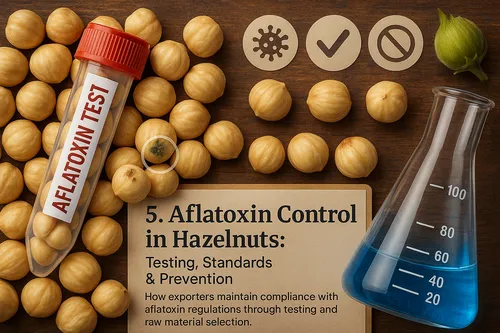
Why aflatoxin control is critical in hazelnuts
Hazelnuts, like other tree nuts, can be exposed to aflatoxin-producing moulds under certain climatic and storage conditions. Although only a small fraction of global hazelnut volume is affected, regulations are strict and even a single non-compliant lot can lead to shipment rejections, recalls and brand risk.
For this reason, exporters, processors and industrial buyers place aflatoxin management at the heart of their quality and food safety systems. Control is achieved through a mixture of good agricultural practices, post-harvest handling, sorting technology and robust laboratory testing protocols.
1. What are aflatoxins and how do they form?
Aflatoxins are toxic metabolites produced by certain species of Aspergillus moulds, typically under warm and humid conditions. In hazelnuts, the risk is highest when:
- Fallen nuts remain on wet ground for too long before collection.
- Drying is delayed or incomplete after harvest.
- Storage conditions are warm, humid or poorly ventilated.
- Damaged or insect-affected nuts are not adequately removed.
Most aflatoxin issues can be traced back to a combination of field conditions and early post-harvest handling. Once contamination has occurred, sorting and testing are required to prevent non-compliant lots from entering the food chain.
2. Regulatory limits for aflatoxins in hazelnuts
Regulatory limits vary by country and market (for example, the European Union has some of the strictest thresholds), but they always include:
- Total aflatoxins: maximum limit for the sum of major aflatoxin types.
- Aflatoxin B1: a specific, more strictly controlled fraction.
- Sampling & testing protocols: defined procedures to collect representative samples.
Exporters supplying high-regulation markets design their quality plans to meet or exceed the strictest applicable limit in their customer portfolio. Buyers should always clarify which market regulation (EU, UK, national laws etc.) the product must comply with.
3. Risk management from orchard to processing
Effective aflatoxin control starts long before laboratory testing. Key control points include:
- In-orchard practices: timely harvest, avoiding prolonged contact between nuts and wet soil, and minimizing mechanical damage.
- Drying: reducing moisture rapidly after harvest using sun drying or mechanical dryers while avoiding re-wetting from rain or condensation.
- Storage: maintaining cool, dry, well-ventilated storage facilities, with pallets off the floor and away from external walls.
- Pre-cleaning: early removal of visibly damaged, insect-infested or mouldy nuts before final processing.
Processors that consistently implement these controls reduce the probability of aflatoxin issues even before analytical testing begins.
4. Sorting, cleaning & reduction of high-risk kernels
Since aflatoxin contamination is often concentrated in a relatively small portion of the nuts, removing defective kernels can significantly reduce risk. Modern plants use a combination of:
- Mechanical cleaning: removing foreign material and undersized pieces.
- Density separation: eliminating very light, shriveled or damaged kernels.
- Optical sorting: color and defect sorting to remove dark, stained or mouldy nuts.
- Manual sorting: trained operators visually inspecting kernels on belts or tables.
While sorting cannot “fix” contaminated nuts, it can substantially reduce the proportion of high-risk kernels and help lots meet regulatory limits when combined with correct raw material selection and storage.
5. Sampling & laboratory testing approaches
Because aflatoxin distribution is heterogeneous, sampling strategy is as important as the test method itself. Typical practices in the hazelnut industry include:
- Incremental sampling: taking multiple small samples from different parts of a lot or container, then combining them into a composite sample.
- Laboratory analysis: using validated test methods performed by accredited labs.
- Retain samples: keeping sealed retain samples for future verification if needed.
- Test frequency: linked to origin, lot history, supplier track record and destination-market requirements.
Many buyers require an official aflatoxin certificate (with test results and method description) to accompany each shipment, especially for high-risk or high-value markets.
6. What industrial buyers should specify
To ensure clarity and accountability, industrial buyers should include aflatoxin requirements in their technical and commercial specifications. At minimum, this typically covers:
- Maximum allowed aflatoxin levels: aligned with destination legislation and internal company policy.
- Required documentation: certificate of analysis (COA), lab name, method used and date of analysis.
- Sampling expectations: confirmation that sampling follows recognized procedures.
- Responsibility and claims policy: how non-conformances are handled if discovered at destination.
When these points are defined in advance, both exporter and importer have a clear framework for collaboration and continuous improvement.
7. Integrating aflatoxin control into your hazelnut sourcing program
A robust hazelnut sourcing program combines supplier selection, process audits, specification clarity and documented testing. Practical steps for buyers include:
- Working with exporters who have established aflatoxin control plans.
- Reviewing sample COAs and historical performance for previous seasons.
- Aligning internal QA teams on acceptable risk thresholds and documentation requirements.
- Implementing incoming inspection protocols at the factory or warehouse level.
Instead of treating aflatoxin as a one-off test, the most resilient programs treat it as a continuous risk management topic integrated into long-term supplier relationships.
Need hazelnuts with aflatoxin-tested lots?
Share your destination market and documentation needs. We will prepare a compliant hazelnut sourcing proposal from Türkiye.