
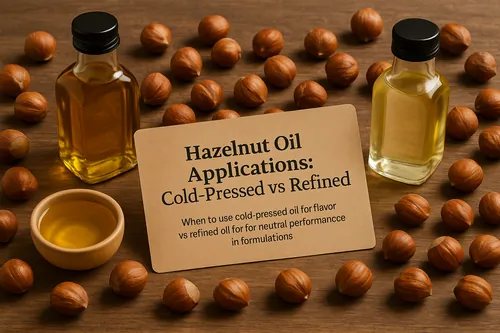
Hazelnut Oil Applications: Cold-Pressed vs Refined
Hazelnut oil is valued for its clean flavor, nutritional profile and functional properties. Cold-pressed oil provides intense aromatic character for gourmet and cosmetic use, while refined hazelnut oil delivers a neutral, heat-stable option suited for large-scale food manufacturing, frying, cosmetics and pharmaceuticals. This guide explains when to choose each oil type and how they behave in industrial formulations.
1. How hazelnut oil is produced
Hazelnut oil is extracted from kernels using either mechanical or chemical processes. The choice impacts flavor, color, stability and suitability for various applications.
- Cold-pressed oil: mechanically pressed at low temperatures without solvents.
- Refined oil: processed through neutralization, bleaching and deodorization to create a clean, stable oil.
For industrial buyers, understanding these differences ensures correct specification for confectionery, bakery, frying, cosmetics or nutraceutical applications.
2. Cold-pressed hazelnut oil: characteristics & applications
Cold-pressed oil retains the natural aromatic compounds and nutritional properties of the kernel.
Key properties
- Flavor: strong, roasted-nut aroma depending on kernel roast level.
- Color: golden, darker if roasted kernels are used.
- Nutritional profile: high oleic acid (~75–80%), vitamin E and antioxidants.
- Smoke point: approx. 160–175°C, not ideal for deep frying.
Best suited for
- Gourmet food products
- Dressings, marinades & finishing oils
- Premium spreads & pralines (flavor enhancement)
- Cosmetic formulations where aroma is desired
Cold-pressed hazelnut oil is often used in small-batch, high-value formulations where aromatic impact matters.
3. Refined hazelnut oil: characteristics & industrial usefulness
Refining removes flavor, aroma and color, resulting in a neutral, stable oil ideal for large-scale production.
Key properties
- Flavor: neutral, allowing use in diverse formulations.
- Higher smoke point: 220–240°C depending on refining quality.
- Improved oxidative stability: longer shelf life & better resistance to rancidity.
- Color: pale yellow, consistent batch to batch.
Best suited for
- Frying & sauté applications
- Industrial bakery & confectionery
- Cosmetic and pharmaceutical formulations requiring neutral aroma
- Emulsions, spreads & non-dairy applications
- Carrier oil in aromatherapy and skincare
Refined hazelnut oil is the dominant choice in high-volume B2B usage due to consistency, long shelf life and broad functional compatibility.
4. Comparison: cold-pressed vs refined hazelnut oil
| Characteristic | Cold-Pressed | Refined |
| Flavor intensity | High, aromatic | Neutral |
| Smoke point | Low–medium | High |
| Applications | Gourmet, cosmetics, premium foods | Industrial, frying, cosmetics, bakery |
| Color | Golden | Light yellow |
| Oxidative stability | Moderate | High |
Industrial procurement teams typically use refined oil for versatility and cold-pressed oils where flavor differentiation is the priority.
5. Choosing the right hazelnut oil for your application
Selecting the correct oil type depends on processing temperature, sensory requirements, regulatory constraints and product positioning:
- Choose cold-pressed: when flavor is the main value driver.
- Choose refined: when heat stability, neutrality or long shelf life is required.
- For cosmetics: both are used, depending on aroma preference.
Both oil types can be supplied in bulk drums, IBCs or flexitanks depending on order size.
Need cold-pressed or refined hazelnut oil for production?
Share your application, required specifications and packaging preference. We will prepare a tailored export offer from Türkiye.