
Hazelnut Oil: Cosmetic vs Food Grade Differences
Hazelnut oil is widely used across the food, cosmetic and wellness industries. However, cosmetic-grade oil and food-grade oil follow different production processes, purity standards, safety requirements and regulatory frameworks. This technical guide explains the key differences and how to choose the correct specification for your industrial application.
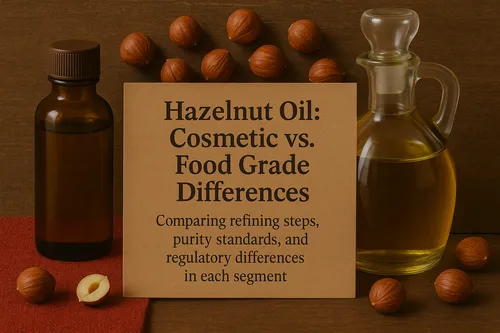
1. Why hazelnut oil has two distinct industrial grades
The same raw material—high-quality Turkish hazelnuts—can be processed into two fundamentally different oils depending on the end-use. The key distinction lies in the production method, refining process, purity level and the regulatory framework governing each category.
- Food grade oil: Safe for human consumption; used in cooking, confectionery, spreads, dressings and flavor systems.
- Cosmetic grade oil: Intended for topical use; used in skincare, haircare, aromatherapy and natural cosmetics.
The two grades often differ substantially in appearance, aroma, viscosity and oxidative stability due to refining steps.
2. Production methods: cold-pressed vs refined oil
Cold-pressed hazelnut oil
- Extracted mechanically without chemicals or high heat.
- Retains natural aroma, flavor and micronutrients.
- Common in gourmet foods, dressings, gelato and premium confections.
- Golden color with a strong hazelnut aroma.
Refined hazelnut oil
- Undergoes neutralization, bleaching and deodorization (NBD process).
- Mild flavor, lighter color and higher oxidative stability.
- Frequently used in cosmetics for its neutral scent and hypoallergenic profile.
- Preferred for frying or high-heat applications in food industries.
Refining removes free fatty acids, odors, pigments and impurities, making the oil more stable but also less aromatic.
3. Cosmetic grade hazelnut oil: technical & regulatory requirements
Cosmetic-grade oil focuses on purity, stability, skin compatibility and compliance with cosmetic regulations (e.g., EU Cosmetics Regulation EC 1223/2009 or FDA cosmetic guidelines).
Key parameters
- Deodorization: Light or no scent preferred.
- Refining degree: High, to remove allergens and unstable compounds.
- Heavy metal limits: Much stricter than food in some segments.
- Shelf life: 18–36 months when properly stabilized.
- Microbiological purity: Standardized for cosmetic-grade oils.
Cosmetic applications
- Moisturizers, serums, facial oils
- Massage oils & aromatherapy blends
- Hair conditioning products
- Natural cosmetics & clean-label skincare
4. Food grade hazelnut oil: technical & safety standards
Food-grade oil must comply with food safety regulations, including hygiene, contaminants, labeling and chemical limits. Unlike cosmetic-grade oil, flavor and aroma can be desirable attributes.
Key parameters
- Peroxide value (PV): Low values indicate stability.
- Free fatty acids (FFA): Indicates freshness and shelf life.
- Moisture content: Typically < 0.1%.
- Aflatoxin compliance: Critical in all edible hazelnut products.
- Flavor profile: Positive, clean, natural hazelnut notes.
Food applications
- Salad dressings
- Artisan confectionery & pralines
- Gourmet cooking
- Flavoring systems & fat blends
- Ice cream, gelato & dessert formulations
5. Chemical & sensory differences between the two grades
Appearance
- Cold-pressed (food): Golden, aromatic, visible natural pigments.
- Refined (cosmetic): Pale yellow, nearly odorless.
Flavor & aroma
- Food grade: Strong hazelnut flavor.
- Cosmetic grade: Neutral scent preferred for formulations.
Oxidative stability
- Refined oil: Highest stability due to removed impurities.
- Cold pressed: Shorter shelf life; more sensitive to oxidation.
6. Choosing the correct grade for your industrial process
Selecting the wrong grade can result in formulation failure, instability or regulatory non-compliance. Buyers should evaluate:
- End-use category (edible vs topical)
- Required oxidative stability
- Aroma tolerance in finished product
- Regulatory compliance requirements
- Viscosity and processing temperature
- Batch-to-batch consistency expectations
For global export programs, processors provide both cosmetic-grade refined oil and food-grade cold-pressed or refined options depending on destination needs.
Need cosmetic or food-grade hazelnut oil?
Share your grade preference, viscosity requirements and packaging needs. We will provide a tailored supply offer from Türkiye.