
Industrial Uses of Hazelnut Shells
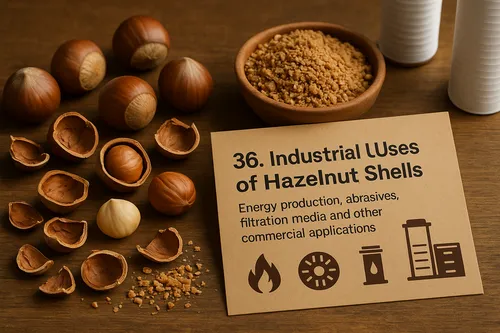
Hazelnut shells, often considered a byproduct of kernel production, have become a valuable industrial resource. Their hardness, density, energy potential and clean-burning properties make them suitable for energy generation, abrasive applications, filtration media, activated carbon production and advanced material development.
1. Overview: From byproduct to high-value industrial material
Türkiye produces more hazelnuts than any other country, generating hundreds of thousands of tons of hazelnut shells annually. Instead of being discarded or burned traditionally, shells are now widely used as industrial inputs due to their mechanical strength, calorific value, and clean chemical profile.
Industries ranging from renewable energy to cosmetics now incorporate hazelnut shells into sustainable, circular production models.
2. Biomass energy: a clean and efficient fuel source
Hazelnut shells have an exceptionally high calorific value — often between 19–21 MJ/kg — comparable to certain grades of wood pellets. Their low ash content and stable combustion make them suitable for household heating systems, industrial boilers and biomass energy plants.
Why manufacturers choose hazelnut shells as biomass fuel:
- High energy density with consistent burn characteristics
- Low emissions and minimal ash production
- Abundant supply from Turkish processing facilities
- Cost-effective alternative to wood pellets or coal
- Renewable and fully biodegradable
Shells are often pelletized or briquetted to improve storage and transportation efficiency.
3. Abrasive blasting media for industrial cleaning
Thanks to their hardness and non-metallic structure, hazelnut shells are widely used as abrasive blasting media in delicate cleaning applications. Industries prefer shell-based abrasives because they clean surfaces without scratching metal, glass or composites.
Common applications:
- Aircraft component cleaning
- Engine part refurbishment
- Wood restoration and paint removal
- Precision cleaning in manufacturing plants
Shells are crushed into granules ranging from fine powders to coarse media, depending on the required abrasion level.
4. Filtration media for water, oil & chemical systems
Crushed hazelnut shells are used as a natural filtration material due to their porous structure and high absorption capacity. They are particularly effective in oil-water separation systems found in marine, automotive and industrial plants.
Key advantages:
- Excellent adsorption of oils and suspended solids
- Long lifespan under continuous operation
- Chemically inert and non-toxic
- Lower cost than synthetic filtration media
Shell-based filtration media is commonly used in wastewater treatment and petroleum industry separation units.
5. Activated carbon & advanced materials
Hazelnut shells are increasingly used as a feedstock for **activated carbon production**, offering high surface area and exceptional adsorption performance. Activated carbon made from hazelnut shells is used in:
- Air purification systems
- Water treatment plants
- Food decolorization and filtration
- Cosmetic and pharmaceutical formulations
Research is also ongoing to use shell-derived carbon materials in batteries, supercapacitors and biocomposites — expanding the value chain significantly.
6. Shells as agricultural amendments
When ground into smaller particles, hazelnut shells can be used as organic soil conditioners, improving aeration, moisture control and long-term soil structure.
- Slow decomposition provides long-lasting soil improvement
- Reduces compaction and enhances drainage
- Suitable for orchards, vineyards and landscaping
7. Economic value & circular economy impact
Hazelnut shells enhance the economic sustainability of the entire supply chain by transforming a once low-value byproduct into commercially valuable outputs. Processors benefit from reduced waste volumes and diversified revenue streams, while industries gain access to renewable, cost-efficient raw materials.
By integrating shell-based materials into industrial systems, Türkiye strengthens its position as a global leader not only in kernel exports but also in circular bioeconomy practices.
Looking for hazelnut-based industrial materials?
We supply bulk hazelnut ingredients and can support your procurement of byproducts such as shells or meal.