
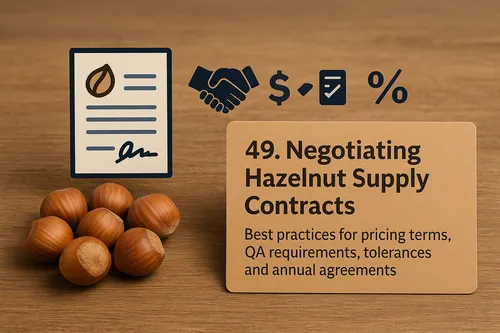
Negotiating Hazelnut Supply Contracts
Industrial hazelnut procurement depends on structured negotiation, clear specifications and well-defined contractual frameworks. This guide explains how manufacturers, importers, roasters and ingredient buyers negotiate volume programs, quality agreements, pricing formulas, and documentation standards with Turkish hazelnut suppliers.
1. Why structured negotiation matters in hazelnut procurement
Hazelnuts are a globally traded commodity with seasonal harvest cycles, price volatility, varying quality levels and complex export requirements. For industrial buyers—especially those producing chocolate, spreads, snacks or bakery items—negotiating the right supply contract is essential for cost stability, quality consistency and uninterrupted production.
Well-negotiated contracts protect against:
- unexpected price swings
- quality deviations affecting roasting performance or product defects
- supply shortages during peak demand months
- documentation issues delaying customs clearance
2. Setting clear quality and technical specifications
Quality parameters form the backbone of any hazelnut supply contract. Manufacturers should specify requirements that align with their production processes and QA standards.
Typical parameters to define:
- Caliber: 9–11, 11–13, 13–15, or custom grades
- Moisture: 3–5% depending on format and roasting application
- Defect tolerances: max % for damaged, shriveled, mouldy or stained kernels
- Skin removal / blanching performance when ordering blanched kernels
- Aflatoxin testing: required or optional, depending on destination country
- Packing: 25 kg vacuum bags, 50 kg PP bags, or 500–1000 kg big bags
Suppliers typically align technical specs to the buyer’s finished product requirements—e.g. chocolate makers generally prefer 11–13 mm or 13–15 mm with lower defect levels.
3. Pricing mechanisms: fixed, floating & hybrid models
Hazelnut prices fluctuate due to harvest size, weather patterns, exchange rates, domestic demand and global buying cycles. Buyers must choose the correct pricing structure for their risk tolerance.
Common pricing models:
- Fixed price contracts: One price agreed for the contract period; ideal for budgeting.
- Floating price contracts: Linked to market indices (e.g., Turkish hazelnut market levels).
- Hybrid formulas: Base price + premium based on quality, processing or specific calibers.
Many long-term buyers use hybrid models to balance cost predictability with market alignment.
4. Volume planning & shipment scheduling
Volume planning is critical, as hazelnut harvests occur once per year (August–September) but production runs year-round. Buyers often commit to annual volumes divided into quarterly or monthly releases.
Key considerations:
- Peak availability is immediately after the harvest season
- Prices tend to shift throughout the crop year
- Forward planning ensures consistent quality across lots
- Container availability may affect shipment timing
Structured release schedules also help processors reserve the correct stock profile (caliber, moisture, lot quality, packaging type).
5. Incoterms & logistics negotiation
Hazelnut contracts commonly use international trade terms to define responsibilities for freight, insurance and risk transfer.
Most common Incoterms:
- FOB (Free on Board): Buyer handles freight; popular for large importers.
- CFR (Cost & Freight): Supplier arranges ocean transport; buyer handles insurance.
- DAP: Delivered to destination; useful for smaller or diversified buyers.
Negotiating Incoterms includes agreeing on container type, palletization, loading supervision, fumigation (if required) and inspection services (e.g., SGS).
6. Documentation & compliance requirements
Ensuring correct documentation prevents customs delays and maintains compliance with food safety regulations. Contracts should specify the documentation set required for export and import.
- Commercial invoice & packing list
- Certificate of Origin
- Phytosanitary certificate
- Health certificate (country-specific)
- Laboratory reports: aflatoxin, microbiology, moisture
- SGS/third-party inspection (optional)
Buyers should request samples or pre-shipment photos of packaging, labeling and palletization.
7. Negotiation best practices for industrial buyers
Experienced buyers follow structured negotiation principles to ensure balanced, dependable supplier relationships.
Recommended best practices:
- Start negotiations early—ideally before the new harvest begins
- Share annual volume forecasts for better pricing
- Provide clear technical specifications upfront
- Request sample lots before signing multi-shipment agreements
- Define dispute resolution procedures and corrective action protocols
- Use historical consumption and performance data to refine contract terms
Strategic buyers treat negotiation as a long-term partnership rather than a one-time transaction, leading to better quality, consistency and risk management.
Need help defining your hazelnut procurement terms?
We provide tailored specifications, pricing logic insights and structured contract support for manufacturers and importers.