
Organic Hazelnut Paste & Praline: Clean-Label Formulation Guide
Organic hazelnut paste and praline have become essential ingredients for premium chocolate, spreads, dairy alternatives and better-for-you confectionery. With clean-label demand rising, manufacturers increasingly prefer organic pastes produced without additives, emulsifiers or artificial flavors — relying solely on roasted organic hazelnuts.
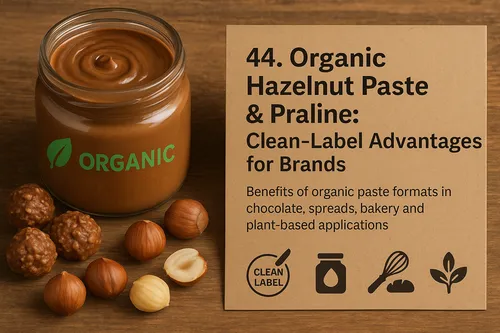
1. Why organic hazelnut paste is ideal for clean-label products
Clean-label expectations are reshaping ingredient selection across chocolate, bakery and plant-based food categories. Organic hazelnut paste fulfills multiple consumer and retailer expectations:
- Single-ingredient formulation: 100% organic hazelnuts, no emulsifiers or additives.
- Traceable origin: Certified organic orchards and segregated processing lines.
- Premium flavor quality: Organic lots typically offer cleaner taste profiles.
- Sustainable & environmentally responsible: Lower-input farming practices align with ESG goals.
As a result, organic paste is increasingly used in premium retail products and functional food lines.
2. Organic certifications required for paste & praline
All organic hazelnut paste and praline must comply with strict regulations governing orchard management, processing conditions and traceability. The dominant certification programs include:
- EU Organic (Regulation 2018/848): Controls inputs, prohibits synthetic chemicals and mandates full traceability.
- USDA Organic (NOP): Defines allowed inputs and requires annual inspections for export eligibility.
- Complementary certifications: Non-GMO, Fairtrade or Rainforest Alliance may be applied depending on brand goals.
Industrial buyers often request updated certificates annually as part of supplier verification programs.
3. Roasting profiles and sensory impact
The roasting stage is the primary determinant of flavor intensity, aroma character and color. Organic pastes are typically produced using the following profiles:
- Light roast: Mild, creamy flavor suitable for dairy alternatives and gelato bases.
- Medium roast: Balanced nutty intensity — ideal for spreads and praline.
- High roast: Strong, bold flavor preferred for chocolate applications.
Custom roasting is common for premium R&D projects, allowing brands to fine-tune flavor profiles.
4. Particle size & texture control in organic paste
Texture and mouthfeel depend heavily on particle size distribution. Organic paste production uses stone mills, ball mills or continuous refining lines to reach desired fineness.
Typical industrial ranges:
- 20–40 microns: Smooth, creamy texture for praline and gianduja.
- 40–80 microns: Slightly coarse textures for bakery fillings.
- Custom milling: Available for specialized product development.
5. Applications in premium and clean-label food categories
Organic hazelnut paste and praline support high-quality, clean-label formulation across dozens of industrial categories:
- Chocolate & pralines: Classic gianduja, praline fillings, visible inclusions.
- Spreads: Clean-label hazelnut and nut-chocolate spreads.
- Bakery & pastry: Fillings, creams and laminated dough applications.
- Plant-based products: Creamers, beverages and dairy alternative desserts.
- Sports nutrition: Natural fat sources in energy bars and protein snacks.
6. Shelf-life, storage & packaging for organic pastes
Organic pastes are sensitive to oxidation due to their high natural oil content. Industrial suppliers follow strict handling protocols:
- Vacuum-packed pails or drums for oxygen control
- Cool storage (15–20°C) away from light
- Optional nitrogen flushing for extended stability
- Batch-level traceability for all organic lots
Shelf life typically ranges from 6–12 months depending on storage and roasting levels.
Need organic hazelnut paste or praline?
Atlas Hazelnuts supplies premium organic pastes for chocolate, spreads, bakery and plant-based applications.