
Organic Hazelnuts: Global Demand, Certification & Industrial Applications
Organic hazelnuts are among the fastest-growing premium ingredients in the global food industry. Clean-label demand, sustainability commitments and premium product innovation continue to drive adoption across chocolate, spreads, bakery, dairy alternatives and nutritional categories.
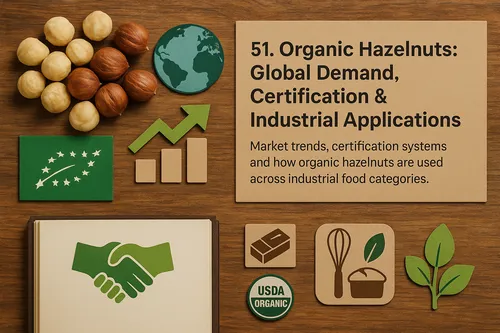
1. Why global demand for organic hazelnuts is rising
Organic hazelnuts have become increasingly attractive to multinational food manufacturers due to clean-label requirements, sustainability initiatives and the rapid expansion of organic-certified product lines. Premium chocolate, spreads, bakery and plant-based brands now rely heavily on certified organic nuts for differentiation and market positioning.
Türkiye is the world’s leading supplier of organic hazelnuts, with extensive certified orchards, experienced processors and long-established organic control systems.
2. Key demand drivers in global markets
- Clean-label growth: Consumers increasingly prefer ingredients that are minimally processed and organically certified.
- Sustainability commitments: Major brands are incorporating organic SKUs into ESG-driven product strategies.
- Rise of plant-based categories: Organic hazelnut paste, flour and oil are widely used in vegan beverages, spreads and desserts.
- Premium positioning: Organic-labeled chocolate, praline and bakery items command higher retail prices and loyalty.
3. Organic certification systems for hazelnut exports
To be sold as organic, both orchard and processor must comply with strict certification frameworks. The following systems govern the majority of global organic hazelnut trade:
EU Organic Certification (Regulation 2018/848)
- Prohibits synthetic pesticides, fertilizers and herbicides.
- Requires dedicated organic storage and processing lines.
- Imposes strict traceability and annual inspection requirements.
- Mandatory for any organic claim on EU retail products.
USDA Organic (National Organic Program – NOP)
- Defines allowed production inputs and documentation protocols.
- Requires annual third-party inspection for export eligibility.
- Supported by mutual recognition arrangements with the EU.
Complementary certifications
- Rainforest Alliance: Sustainability, biodiversity and ethical sourcing.
- Fairtrade: Social responsibility and guaranteed minimum pricing.
- Non-GMO verification: Required for certain retail markets.
4. Maintaining organic integrity from orchard to export
Organic hazelnuts require complete separation from conventional material at every stage to preserve certification validity. Certified processors use dedicated equipment, isolated storage zones and detailed lot-level documentation.
Critical control points
- Certified organic orchards and approved grower networks
- Dedicated receiving areas and drying facilities
- Organic-only cracking, sorting and packaging lines
- Batch traceability supported by regular audits
- Sealed containers and export inspection procedures
5. Industrial applications of organic hazelnuts
Organic hazelnuts are widely used in premium product categories where clean-label and sustainability claims strengthen brand value. Key applications include:
- Chocolate & pralines: Organic kernels, paste and gianduja for premium lines.
- Spreads & fillings: Organic hazelnut paste for clean-label confectionery and bakery.
- Bakery & pastry: Organic chopped kernels, meal and flour for artisanal recipes.
- Dairy alternatives: Organic beverages, creams, gelato bases and barista blends.
- Nutrition products: High-energy bars, vegan snacks and performance foods.
6. Market outlook & supply planning considerations
As sustainable and premium categories continue expanding, organic hazelnuts are expected to gain even greater strategic value. However, supply is limited by slow orchard conversion cycles and regulatory constraints.
- Engage in multi-year contracts to secure consistent supply.
- Request updated certificates annually from suppliers.
- Plan organic procurement early due to limited acreage.
- Evaluate value-added certifications such as Rainforest Alliance or Fairtrade.
Looking to source certified organic hazelnuts?
We support global manufacturers with EU & USDA organic-certified programs, documentation and long-term supply planning.