
Sustainability in Hazelnut Farming & Processing
Sustainability has become a defining element of global hazelnut sourcing. This article explains how Türkiye’s hazelnut sector supports environmental preservation, responsible farming, ethical labor, community impact programs and traceable supply lines for manufacturers and importers.
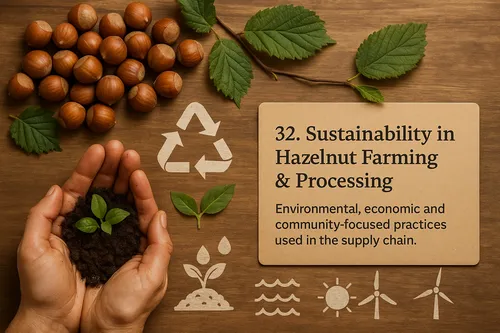
1. Why sustainability matters in hazelnut sourcing
As global demand for hazelnuts continues to grow — especially in chocolate, spreads, plant-based foods and premium confectionery — sustainability has become a defining factor in how industrial buyers evaluate suppliers. Manufacturers increasingly require:
- Environmentally responsible farming practices
- Ethical labor and community protections
- Traceable supply chains
- Compliance with international sustainability frameworks
- Assurance of long-term agricultural viability
Türkiye, as the world’s leading hazelnut producer, has developed structured programs to support sustainable cultivation and responsible export operations.
2. Environmental sustainability & orchard management
Hazelnut orchards in Türkiye are typically owned by smallholder farmers, many of whom follow long-established agricultural practices that emphasize soil health and minimal chemical usage.
Key environmental practices include:
- Soil preservation: erosion control through terracing and natural ground cover.
- Low pesticide usage: hazelnuts typically require fewer pesticides than many fruits.
- Biodiversity: intercropping and natural vegetation surrounding orchards support ecosystem health.
- Efficient water use: irrigation is minimal in Black Sea regions due to high natural rainfall.
- Organic farming potential: many regions can transition to organic certification.
These practices help maintain long-term orchard productivity and reduce environmental impact.
3. Ethical farming, labor standards & community welfare
Ethical labor practices are increasingly important in global nut supply chains. Turkish exporters work with cooperatives, family farms and community organizations to promote:
- Fair working conditions and wage standards
- Prevention of child labor in agricultural activities
- Training programs for safe harvesting methods
- Support for migrant and seasonal workers
- Community development initiatives in rural areas
Many processors participate in international sustainability frameworks and undergo third-party audits to validate compliance with ethical sourcing standards.
4. Reducing environmental impact in processing facilities
Modern hazelnut cracking, sorting and processing facilities in Türkiye increasingly invest in environmentally conscious technologies and resource-efficient systems.
Examples include:
- Energy-efficient machinery for cracking, roasting and blanching
- Waste heat recovery during roasting processes
- LED and low-energy lighting for factories
- Water recycling systems in shell-cleaning operations
- Hazelnut shell reuse in biomass fuel and industrial abrasives
These investments reduce carbon footprint and enhance the sustainability profile of exported hazelnut ingredients.
5. Traceability systems & documentation
Traceability is one of the strongest expectations from international buyers, especially those supplying chocolate, baby food, premium retail and plant-based markets.
Common traceability elements:
- Farm and region identification
- Processing batch codes
- Lot-based quality analysis reports
- Export documentation tracking
- Optional sustainability certification numbers
Exporters frequently implement digital quality tracking systems to provide full visibility across the supply chain.
6. Sustainability certifications in the hazelnut industry
Depending on buyer requirements and product formats, exporters may support certification programs such as:
- Organic (EU, USDA)
- Fairtrade
- Rainforest Alliance
- GlobalG.A.P.
- SMETA / SEDEX ethical audits
- ISO 14001 environmental management
Certification helps buyers navigate compliance and build sustainability claims for their consumers, especially in high-transparency markets.
7. Long-term sustainability outlook for Turkish hazelnuts
Türkiye continues to invest in agricultural modernization, farmer training and orchard renewal programs. Key priorities for the coming decade include:
- Improving yield consistency through orchard rehabilitation
- Encouraging young farmers to remain in agricultural sectors
- Promoting environmentally friendly fertilization and pruning techniques
- Enhancing data-driven quality control and traceability systems
As sustainability expectations in global food industries increase, Turkish suppliers are well-positioned to support manufacturers with compliant and responsibly sourced hazelnut ingredients.
Looking for sustainably sourced hazelnut ingredients?
We cooperate with leading processors and farming groups committed to long-term, ethical and environmentally responsible supply.